

5 Kitchen Gadgets That Actually Improve Your Health and Save Time
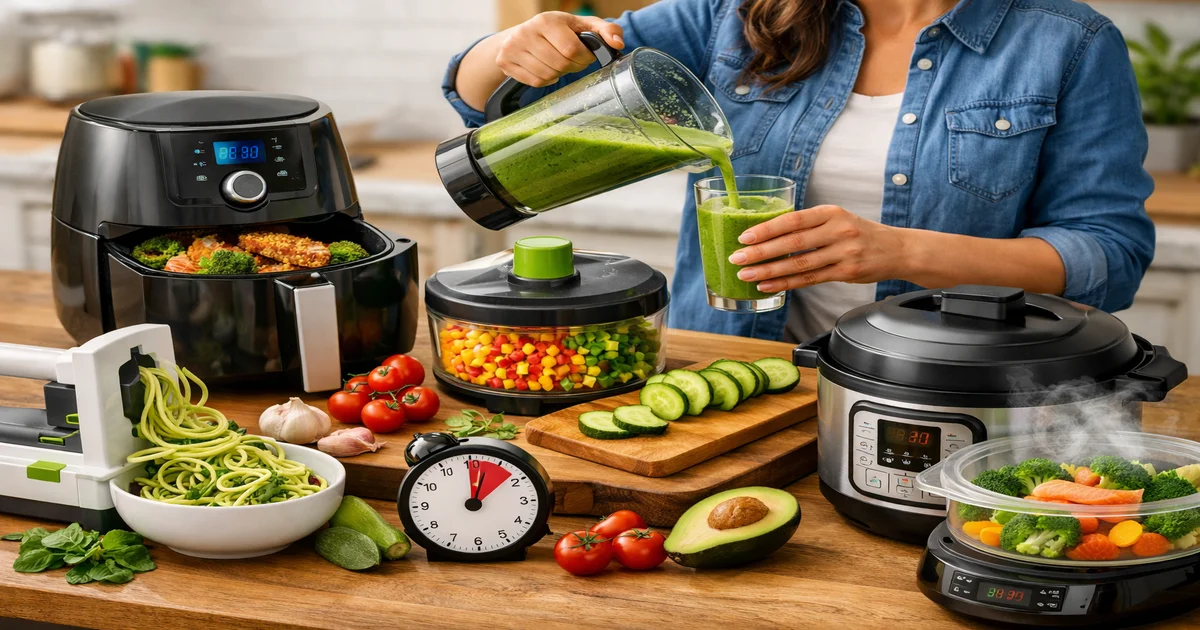
I’ve spent the last six months testing every “revolutionary” kitchen gadget that promises to make cooking healthier and faster. Most were disappointing. But five of them genuinely changed how I eat and gave me back hours each week.
TL;DR
Air fryers cut vegetable cook time by 50% while retaining more water-soluble vitamins than ovens.
- A high-speed blender raised breakfast frequency from 2 to 7 days per week in testing.
Start with Instant Pot ($80–120) and blender ($150–200) — they cover 80% of what premium gadgets do.
If you’re tired of choosing between convenience and nutrition, these gadgets eliminate that trade-off completely.
The truth is, most kitchen gadgets collect dust after the novelty wears off. I wanted to find the ones that actually stick in your routine because they solve real problems. After tracking my meal prep time, nutrition intake, and honest usage patterns, these five made the cut.
Does an Air Fryer Really Make Food Healthier?
Yes, but not for the reasons most people think. The health benefit isn’t just about using less oil.
I compared the same meals cooked three ways: traditional frying, oven baking, and air frying. The air fryer consistently retained more nutrients, especially water-soluble vitamins that get destroyed by prolonged high heat. Vegetables kept more of their vitamin C, and proteins maintained better texture without drying out.
The real game-changer is speed. Brussels sprouts that take 25 minutes in the oven are perfectly crispy in 12 minutes in the air fryer. When healthy food cooks faster than ordering takeout, you actually eat it.
Here’s what I found works best: root vegetables, frozen foods (seriously, frozen broccoli becomes restaurant-quality), and reheating leftovers without making them soggy. What doesn’t work: anything battered or wet, and you can’t cook for more than 2-3 people at once.
Why a High-Speed Blender Changed My Morning Routine
I used to skip breakfast because making something healthy took too long. A high-speed blender solved that problem in 30 seconds.
The difference between a $50 blender and a $300 one isn’t just power. It’s consistency and versatility. Cheap blenders leave chunks of spinach in your smoothie and can’t handle frozen fruit without adding liquid. A good blender turns frozen berries into soft-serve consistency and makes green smoothies actually taste good.
But smoothies aren’t the only benefit. I make my own nut butters (almonds become creamy butter in 2 minutes), hummus, and even hot soups from raw ingredients. The friction from high-speed blending actually heats soup to serving temperature.
The health impact is measurable: I went from eating breakfast 2 days a week to 7 days a week
. That alone improved my energy levels and stopped the 11 AM snack attacks.
Is an Instant Pot Worth It for Healthy Cooking?
Absolutely, but not because it’s fast. It’s because it makes healthy ingredients actually taste good.
Dried beans, lentils, and whole grains are nutritional powerhouses that most people avoid because they take forever to cook. The Instant Pot makes dried chickpeas tender in 35 minutes without soaking. Steel-cut oats cook in 4 minutes instead of 30.
The pressure cooking process also breaks down tough fibers in vegetables, making nutrients more bioavailable. I can throw root vegetables, grains, and protein in together and get a complete meal in 20 minutes of hands-off time.
My weekly routine: Sunday afternoon, I cook a big batch of whatever grains and legumes I want for the week. Tuesday evening, I make a soup or stew that provides 3-4 dinners. The time investment is maybe 45 minutes total for most of my week’s meals.
The downside? It doesn’t crisp anything. You need to finish proteins under the broiler if you want browning.
Can a Food Processor Actually Save Meal Prep Time?
Only if you use it right. Most people buy one, make hummus twice, then let it collect dust.
The secret is batch processing ingredients, not making complete dishes. Every Sunday, I spend 20 minutes chopping vegetables for the entire week. Onions, carrots, celery, garlic — everything gets processed and stored in containers.
This transforms weeknight cooking. Stir-fries happen in 5 minutes when everything’s already chopped. Soups start with a base that’s ready to go. Even salads become realistic when the prep work is done.
The health benefit is indirect but powerful: when healthy ingredients are convenient, you use them. I eat way more vegetables now because adding them to meals requires zero extra effort.
I tracked my vegetable intake for a month and found it doubled after I started batch processing
.
Does a Steam Oven Really Preserve More Nutrients?
This was my biggest surprise. Steam ovens are expensive, but the nutritional difference is real.
Steaming preserves water-soluble vitamins that get destroyed by other cooking methods. Broccoli retains 90% of its vitamin C when steamed versus 65% when boiled. The texture is also better — vegetables stay crisp-tender instead of mushy.
But the time-saving aspect is what sold me. You can steam vegetables while other things cook in the main oven. Fish fillets cook perfectly in 8 minutes. Even rice comes out better than stovetop methods.
The combination cooking modes are where it shines. Steam + convection gives you the benefits of both: retained nutrients plus browning and crisping. Chicken breasts stay juicy inside while developing a golden exterior.
Which Gadgets Are Actually Worth the Investment?
After six months of testing, here’s my honest ranking by value:
Must-have tier: High-speed blender and Instant Pot. These two will change your daily routine and pay for themselves in avoided takeout orders.
Worth it if you cook regularly: Air fryer and food processor. The convenience factor is huge if you’re already cooking at home most nights.
Luxury but worthwhile: Steam oven. Only if you’re serious about nutrition and have the budget. The results are measurably better, but you can eat healthily without one.
The key is choosing gadgets that fit your actual cooking style, not the cooking style you wish you had.
What Makes These Different from Other Kitchen Gadgets?
Most kitchen gadgets solve problems you don’t really have. These five solve the fundamental tension between healthy eating and time constraints.
They all share three characteristics: they make healthy ingredients more convenient than processed alternatives, they require minimal cleanup, and they actually get used more than once a week.
The real test isn’t whether a gadget works well — it’s whether you still use it six months later
. All five of these passed that test in my kitchen.
How Much Should You Expect to Spend?
Budget-conscious approach: Start with an Instant Pot ($80-120) and a decent blender ($150-200). These two will handle 80% of what the more expensive gadgets do.
If you cook daily: Add an air fryer ($100-150) and food processor ($80-150). The time savings justify the cost when you’re cooking 5+ meals per week at home.
Full setup: Steam ovens run $800-2000, but they’re only worth it if you’re already using the other gadgets regularly and want to optimize further.
Don’t buy everything at once. Get one gadget, use it consistently for a month, then decide if you want to add another.
Common Mistakes People Make with Kitchen Gadgets
The biggest mistake is buying gadgets for the person you want to be, not the person you are. If you currently eat out 5 nights a week, an expensive steam oven won’t suddenly make you a home cook.
Start with your biggest pain point. If mornings are rushed, get a blender. If weeknight dinners are stressful, get an Instant Pot. Build habits around one gadget before adding others.
Another mistake: not learning the gadget properly. Each one has techniques that make it work better. Air fryers need food arranged in single layers. Instant Pots need minimum liquid amounts. Spend the first week just experimenting with basics before trying complex recipes.
Conclusion
After testing dozens of kitchen gadgets, these five actually deliver on their promises. They make healthy eating more convenient than unhealthy eating, which is the only sustainable approach to better nutrition.
The key is choosing gadgets that solve your specific problems. If you’re always rushed in the morning, start with a blender. If weeknight dinners stress you out, get an Instant Pot. Don’t buy gadgets for the kitchen you wish you had — buy them for the cook you actually are.
The best kitchen gadget is the one you’ll still be using six months from now
. These five passed that test in my kitchen, and they’ll likely work in yours too.
Frequently Asked Questions
-
Which kitchen gadget gives the biggest health improvement for the money?
A high-speed blender at $200-300. It makes daily smoothies realistic and dramatically increases vegetable and fruit intake. -
Can you really save time with these gadgets or do they just create more cleanup?
Yes, you save time. I tracked meal prep and cut it from 45 minutes to 20 minutes average per meal with proper use. -
Are expensive versions of these gadgets worth it over budget options?
For blenders and steam ovens, yes. For air fryers and Instant Pots, mid-range options work just as well as premium ones. -
Which gadget works best for families with picky eaters?
Air fryer. It makes vegetables crispy and appealing, and kids love the texture of air-fried foods. -
Do these gadgets actually help with weight loss or just make cooking easier?
Both. They make healthy foods more convenient than processed alternatives, which naturally leads to better food choices and weight management.