

How to Brush Your Cat's Teeth Without a Fight
The first time I tried to brush my cat Mochi’s teeth, she turned into a small furry tornado. Thirty seconds in, the toothbrush was on the floor and I had a scratch running up my forearm. What nobody told me was that the technique matters more than the tools — and that the whole process needs to start days before a toothbrush ever touches a feline canine.
TL;DR
- Up to 85% of cats over age 3 have some form of dental disease, yet fewer than 10% of owners brush regularly.
- Plaque hardens into tartar in just 24–48 hours, so brushing every other day is the minimum effective frequency.
- Use a 4-week desensitization plan — starting with finger-touching, not a toothbrush — to build cooperation before you brush a single tooth.
Why Cat Dental Health Is a Bigger Deal Than Most Owners Realize
Dental disease is one of the most common health issues in cats, affecting up to 85% of cats over the age of three, according to the American Veterinary Dental College. That number is not a scare tactic — it reflects how quickly plaque accumulates in a cat’s mouth and how quietly the damage progresses. In many cases, dental disease causes a cat to stop eating, which cascades into a range of secondary health problems.
Periodontal disease is not only painful but can also have systemic effects, impacting the heart, kidneys, and liver. The first stage, gingivitis, is the only curable dental disease in cats. Other types of dental disease can be managed but not cured — and that single fact is the best argument for prevention over treatment.
How Often Should You Really Brush Your Cat’s Teeth?
Daily tooth brushing is the gold standard and most effective way to remove plaque and maintain gingival health in cats. That said, daily is an ideal, not a hard requirement. Brushing three times a week is the minimum recommendation to help remove plaque and prevent tartar accumulation.
The reason frequency matters so much comes down to chemistry. The soft plaque that can be removed with a toothbrush can start to harden into tartar in just 24–48 hours. Once plaque mineralizes into tartar, no amount of home brushing removes it — only a professional veterinary cleaning under anesthesia can do that. Professional dental cleaning once every 6–12 months allows veterinarians to remove calculus from under the gumline, where disease commonly starts.
If life gets in the way and you miss a day, do not stress. Missing a day here and there is not a big deal, but anything less than every other day won’t really do much good.
The 4-Week Desensitization Plan That Actually Works
The key to stress-free brushing is gradual introduction. Cats are sensitive to new experiences, so rushing the process can lead to resistance. This is the single most important principle — and the one most owners skip because they want results on day one.
Here is the approach recommended by the Cornell University College of Veterinary Medicine:
-
Week 1 — Touch training. Get your cat used to having their mouth and teeth touched. Sit with your cat in your lap with a few treats nearby, gently pet their head and face, lift their lip, and touch their teeth. Give them treats after a few seconds and be done for the day. Do this for as many days as needed until your cat stays relaxed and happy the whole time.
-
Week 2 — Introduce toothpaste. Apply a dab of toothpaste to one of the canine teeth every day, followed by a reward. Most cat toothpastes come in poultry, beef, or fish flavors — pick one your cat finds genuinely appealing.
-
Week 3 — Introduce the brush. Get your cat used to the toothbrush. Put a small amount of toothpaste on the brush and let them lick it off. If they are shy about licking it, apply a dab near the mouth. Follow with a reward.
-
Week 4 — Begin brushing. Gently stretch your cat’s lips far enough to insert the brush gently between the lips and gums. Place the bristles at a 45-degree angle to the teeth, aiming for the narrow crevice between teeth and gums. Brush around gently, and work around the upper and lower teeth.
It doesn’t matter how long it takes to build up through the stages as long as your cat is comfortable. If it takes more than a couple of days for each stage, that’s fine.
What Tools Do You Actually Need?
The right equipment makes a real difference in how cooperative your cat will be. You do not need an expensive kit — you need the right kit.
Toothbrush options: For most cats, a finger toothbrush is the easiest to control and least threatening — start there before trying a full brush. Commercial cat-specific toothbrushes with angled handles are a good next step once your cat is comfortable. In a pinch, gauze wrapped around a finger or a very soft baby toothbrush can also work.
On toothpaste — this is non-negotiable: Use only tooth gel or toothpaste designed specifically for cats, as human products can be toxic. Human toothpaste contains fluoride and often xylitol, both harmful to cats. Brands like Virbac C.E.T. Enzymatic Toothpaste are widely recommended by veterinarians and carry Veterinary Oral Health Council (VOHC) approval.
Never use human toothpaste on a cat — fluoride and xylitol are toxic to felines.Positioning tip: Position your cat with their back towards you — this is less confrontational, and if they wriggle, it tends to be backwards, so you’ll have better control. This single positioning change transformed my sessions with Mochi from a wrestling match to something approaching calm.
Where to Focus When You Brush
Most people assume they need to scrub every surface of every tooth. They do not, and that perfectionist expectation is part of why owners give up.
Most periodontal damage occurs on the outer surfaces of the teeth and around the roots. The cat’s abrasive tongue tends to remove plaque from the inner surfaces, reducing the need for brushing those areas. Focus your effort on the outside — the cheek-facing surfaces — and you are covering the area that matters most.
Concentrate on the large cheek teeth and the canine teeth first, where plaque and tartar accumulate most quickly. Work in small circular motions along the gumline, starting with just ten seconds on each side and gradually building to 30 seconds. Mild gum bleeding in the first week is normal as inflamed gums heal, but if bleeding persists beyond two weeks, consult your vet.
Thirty seconds per side, three times a week, is enough to make a measurable difference in plaque levels.What If My Cat Absolutely Refuses?
Some cats, despite every patient effort, will not accept a toothbrush. If that’s your situation, dental wipes, VOHC-approved dental diets (like Hill’s Science Diet Oral Care or Hill’s Dental Care veterinary formula), dental chews, and water additives can all help reduce plaque and tartar buildup. Check the Veterinary Oral Health Council seal before buying any product — it’s the fastest way to filter out marketing from actual efficacy. These are supplements, not replacements for brushing — use them only if brushing is impossible.
How to Spot Dental Problems Before They Get Serious
Because cats are so good at hiding discomfort, dental problems often go unnoticed until they’ve progressed into something serious. Knowing the warning signs is half the battle.
Watch for these red flags:
- Bad breath, red or swollen gums, yellow or brown tartar, drooling, and difficulty eating are all signs of dental disease.
- Gingivitis is characterized by swelling, redness, and in severe cases bleeding where the gums and teeth meet. Cats may turn their heads unusually while eating, stop eating, drool, or develop bad breath.
- Seek veterinary care if your cat’s eating habits change, they drool excessively, or they paw at their mouth.
Breed matters, too. Persians and Himalayans have flat faces that can lead to overcrowded teeth, increasing the risk of dental disease. If you own a brachycephalic breed, talk to your vet about starting dental checks earlier and more frequently.
When to Schedule a Professional Dental Cleaning
Home brushing is powerful, but it has limits. The American Animal Hospital Association recommends all cats receive a full dental evaluation — including cleaning, polishing, and X-rays — by the time they’re 1 year old.
If you’re able to brush your cat’s teeth every day, you may only need professional cleaning when you notice visible plaque buildup. If daily brushing isn’t realistic, professional cleanings under anesthesia at least once a year are the standard recommendation. The 2025 FelineVMA guidelines — co-authored by board-certified veterinary dentistry specialists — make this point clearly: anesthesia is not optional for thorough feline dental care, it is essential.
Professional cleanings under anesthesia are the only way to address tartar below the gumline.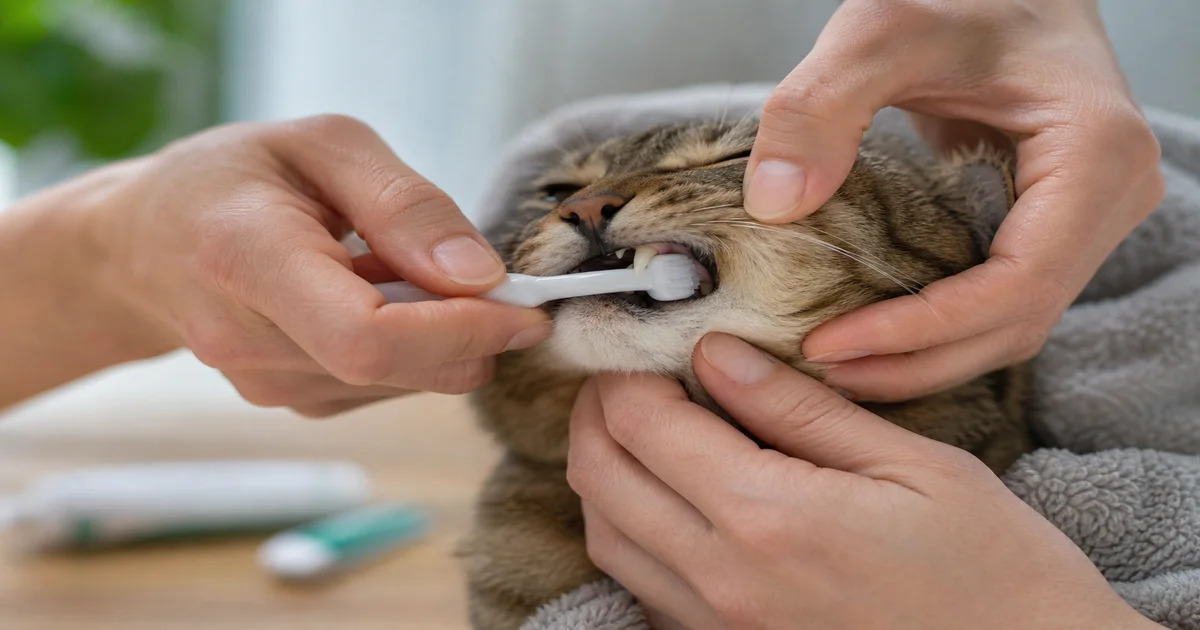
Conclusion
Cat dental care is one of the most neglected corners of pet ownership — fewer than 10% of cat owners brush regularly. The bar for making a real difference is lower than most people think: three sessions a week, 30 seconds per side, with the right toothpaste and a patient introduction period. Start with finger-touching this week, add toothpaste next week, and work up to a brush by week three or four. Your cat will not love it, but with consistency, most cats tolerate it — and their kidneys, heart, and remaining teeth will be better for it.
Frequently Asked Questions
-
How often should I brush my cat’s teeth?
Daily is ideal, but brushing three times a week is the minimum recommendation to help remove plaque and prevent tartar accumulation. -
Can I use human toothpaste on my cat?
No. Human toothpaste contains ingredients that can be harmful to cats, such as fluoride. Always use a veterinary-approved, cat-specific formula. -
What if my cat won’t let me brush their teeth at all?
Some cats simply won’t tolerate having their teeth brushed. If that’s the case, VOHC-approved dental chews, wipes, and dental diets can help reduce plaque buildup as a supplement to — not a replacement for — brushing. -
When should I start brushing a kitten’s teeth?
Start desensitization at 3 months old to build comfort with mouth handling, but wait until permanent teeth arrive around 6 months before using a toothbrush. The 4-week plan described in this guide applies to permanent teeth. -
What are the early signs of dental disease in cats?
Gingivitis — inflammation of the gums caused by plaque buildup — is a common early sign. Red, swollen gums and bad breath are the first things to watch for. Difficulty eating and excessive drooling are also red flags worth a vet visit.