

How to Groom Your Dog at Home Without a Professional
Preparation and patience matter far more than technique when it comes to grooming your dog at home. I learned that the hard way after nicking my dog’s quick on the first nail trim attempt. grooming your dog at home is genuinely doable, but only if you respect the details. This guide covers every step, the tools worth buying, and the mistakes that silently cause harm.
TL;DR
- Most dogs need a full bath every 4–6 weeks; bathing more often strips natural skin oils and causes dryness.
- If you can hear your dog’s nails clicking on the floor, they are already too long and need trimming immediately.
- Always brush before bathing — water tightens mats and makes tangles significantly harder to remove.
What Tools Do You Actually Need to Groom a Dog at Home?
Getting the right equipment before you start is the single biggest factor separating a calm session from a chaotic one. The five essential tools for safe at-home dog grooming are a quality slicker brush, a nail grinder with a safety guard, a gentle ear cleaning solution, dog-specific shampoo, and a secure grooming table or non-slip mat.
Beyond that starter kit, your brush choice depends entirely on coat type. Longhaired dogs need pin brushes with long, round-ended stainless-steel or chrome-plated pins, while short-, medium-, and some long-coated breeds do better with bristle brushes. For double-coated breeds like Huskies or Golden Retrievers, an undercoat rake is non-negotiable — a slicker brush alone won’t reach the dense undercoat where mats actually form.
Using the wrong grooming tools can cause pain or discomfort to your dog, as well as damage their coat. Check with your vet or breeder before buying — a five-minute conversation can save you from purchasing three brushes that don’t work.
One more thing: never use human shampoo or other human products on your dog. Their skin has a different pH balance, and human formulas can cause dryness, irritation, and skin problems. Even baby shampoo falls into this category.
How Often Should You Brush Your Dog?
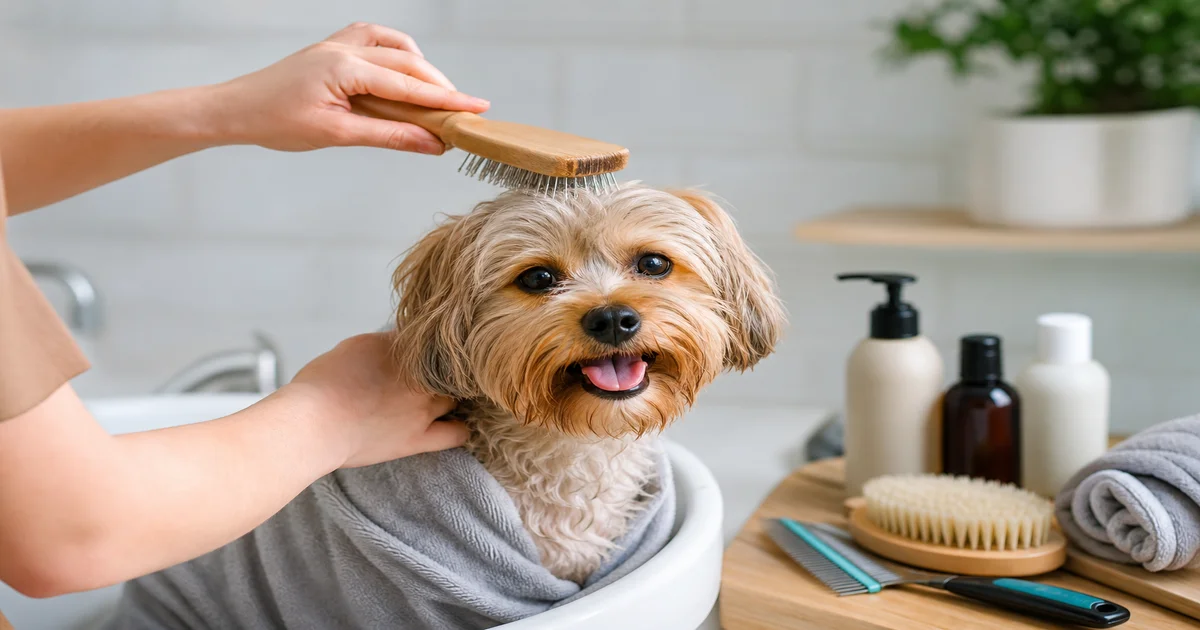
Brushing is the backbone of any grooming routine — and the frequency depends on coat length, not just preference. Regular brushing two to three times weekly works for short coats, while long coats need daily attention to promote airflow and prevent matting.
Here’s what most people get wrong: they brush only the surface. Short, frequent sessions with line brushing down to the skin prevent mats and shorten future grooming time. Common mistakes include quick surface passes, brushing only the top line of the back, and ignoring friction zones such as behind the ears, the armpits, and the hindquarters.
Pay special attention to those friction zones. That’s where mats form first, and skipping regular sessions can lead to tangled hair that requires a professional groomer to fix. Matting can also trap dirt, debris, and even parasites like fleas and ticks, causing skin irritation and infections.
How to Bathe a Dog at Home Without Stress
Bath time is where most owners make their biggest errors — and the mistakes often start before the water even turns on. Water worsens mats, so brush your dog before bath time. This step alone changes the entire outcome of the session.
Bathing removes dirt, allergens, and excess oils that can irritate your dog’s skin. For most dogs, a bath every 4–8 weeks works well. The AKC recommends adjusting based on your dog’s individual lifestyle — a dog that swims weekly needs more frequent rinsing than one who rarely goes outdoors.
After the bath, drying matters more than most owners realize. Use a microfiber towel and a hair dryer on a low setting, moving it in a back-and-forth motion and holding it away from the skin to prevent burns.
Leaving a dog damp in a cool room is uncomfortable and can encourage yeast in skin folds and ear canals. The bigger question for many owners is whether to use a dryer at all — which connects directly to how you handle the coat after the bath.
How to Trim Dog Nails Without Hurting Them
Nail trimming is the task that intimidates most people, and honestly, the anxiety is understandable. Neglected nails can curl and dig into your dog’s paw pads, making walking genuinely painful.
The golden rule from the AKC: if you can hear the nails clicking on the floor, they’re too long. That’s your clearest signal to act.
A good rule of thumb is to check nail length every 3–4 weeks. Some dogs may need trims more often, depending on their activity level and walking surface.
To avoid cutting the quick — the pink part of the nail containing blood vessels and nerves — only trim a small amount at a time. For dogs with dark nails where the quick isn’t visible, trim tiny slivers and look for a chalky white circle in the cross-section; stop when you see it.
always keep styptic powder within reach before you start trimming nails. If you do nick the quick, apply styptic powder to the bleeding tip immediately with light pressure. Corn starch works in a pinch if you don’t have styptic powder on hand.
Quick, stressful trims teach dogs to fight the process. Start with daily “touch and treat” sessions to desensitize paws, then file or trim one or two nails at a time and stop while your dog is still calm.
How to Clean Your Dog’s Ears Safely
Ear care is one of the most overlooked parts of at-home grooming, and getting it wrong can cause real harm. Clean the outer part of the ear once a month — or more often if your dog is prone to ear problems — using a veterinarian-recommended ear cleanser. Never force anything into the ear canal.
The tool most people reach for — cotton swabs — is actually the wrong choice. Cotton swabs push wax deeper and can injure delicate tissue. Instead, fill the canal as directed with cleanser, massage the base, let your dog shake, and wipe only what you can see with cotton balls or gauze.
Dogs with floppy ears are more likely to develop ear infections. Keep an eye out for redness, discharge, odor, or pawing at the ears — any of those signs may indicate infection and require a visit to your veterinarian.
Should You Shave Your Dog in Summer?
This is one of the most common questions I get, and the answer almost always surprises people. Shaving double-coated breeds like German Shepherds, Huskies, and Pomeranians is usually counterproductive — their undercoat traps air that actively cools them down, and removing it increases the risk of sunburn, heat stroke, and poor coat regrowth.
Instead of shaving, opt for light trims around paws and belly to promote airflow without compromising the coat’s protective function. For double-coated breeds specifically, the American Kennel Club recommends de-shedding treatments over shaving — as of their March 2026 update on grooming guidance.
shaving a double-coated dog in summer often does more harm than good — this is one of those cases where the instinctive move is the wrong one.
Grooming by Coat Type — A Quick Reference
Not all coats need the same approach. Here’s how the main coat types break down:
| Coat Type | Breed Examples | Brush Frequency | Bath Frequency |
|---|---|---|---|
| Short, smooth | Beagle, Boxer, Chihuahua | Once a week | Every 4–6 weeks |
| Short, dense (double) | Labrador, Golden Retriever | 2–3x per week | Every 4–6 weeks |
| Long, silky | Shih Tzu, Maltese, Yorkie | Daily | Every 3–4 weeks |
| Curly / wavy | Poodle, Doodle, Bichon | Daily | Every 3–4 weeks |
| Double coat (heavy) | Husky, Malamute, Chow | Daily during shedding season | Every 6–8 weeks |
Understanding your dog’s specific coat type is fundamental to proper grooming. By matching your tools to the coat, you enhance the experience for both of you.
This is also where I’ll admit a real limitation: long-haired breeds like Maltese and Yorkies, as well as curly-haired breeds like Poodles and Bichons, may need professional grooming even with consistent home maintenance. Replacing professional appointments entirely for these breeds usually isn’t realistic — but home upkeep between visits absolutely is.
The Mistakes That Quietly Cause the Most Harm
Over-bathing strips oils so gradually that owners don’t notice until the coat turns dull and itchy. Most dogs only need a bath every four to six weeks — frequent washing feels thorough but quietly damages the skin barrier over time.
Another common mistake is brushing your dog post-bath, when they’re still wet. Water makes mats and knots tighter in long-haired breeds, and a wet brush can pull at the skin and cause real discomfort. Always brush before the bath, not after.
If your dog is stressed, take a break. Rushing through grooming creates long-term fear and resistance — a dog that dreads grooming becomes harder to handle at every future session, including at the vet.
treat every grooming session as a full-body health check, not just a cleanup — that mindset shift changes what you notice and how quickly you catch problems. Groomers frequently find ear infections, bumps, scabs, or parasites that owners then bring to their vet’s attention.
Conclusion
At-home dog grooming is a genuine skill, not a shortcut. Done well, it saves money, reduces your dog’s anxiety around handling, and gives you an early warning system for health issues. Start with the basics — consistent brushing, the right shampoo, and nail checks every three to four weeks — and add complexity as your confidence builds. Keep sessions short, use treats generously, and increase duration only as your dog grows comfortable. If you’re ready to go deeper, the next step is understanding how coat health connects to nutrition — a topic I covered separately in a guide on diet and skin condition.
Frequently Asked Questions
-
How often should I groom my dog at home?
Most dogs need brushing two to three times weekly and a full bath every four to six weeks, though long-haired breeds may need daily brushing and more frequent baths. -
What happens if I accidentally cut the quick when trimming nails?
Apply styptic powder immediately with light pressure to stop the bleeding. The wound is minor and heals quickly — keep styptic powder in your grooming kit before every session. -
Can I use baby shampoo on my dog if I run out of dog shampoo?
No. Even baby shampoo disrupts your dog’s skin pH balance and can cause dryness and irritation. Always use a shampoo specifically formulated for dogs. -
How do I groom a dog that hates being touched?
Start with short daily “touch and treat” sessions before introducing any tools. Pair every paw touch, ear handle, and brush stroke with a high-value treat until the dog associates handling with reward. -
When should I stop grooming at home and see a professional?
Severe matting, skin infections, extreme anxiety during sessions, or any situation requiring breed-specific cuts are strong signals to book a professional groomer rather than push through at home.