

How to Grow Herbs Indoors Without Sunlight: 6 Proven Methods
I live in a basement apartment with exactly zero natural light, and I was tired of paying $4 for wilted basil at the grocery store. So I spent six months testing every method I could find to grow herbs indoors without sunlight. Three methods failed miserably, but the other three gave me fresh herbs year-round for less than $20 per month.
Here’s what actually works, what’s a waste of money, and the exact setup I use now to keep my kitchen stocked with fresh basil, cilantro, and parsley even in the dead of winter.
Can You Really Grow Herbs Without Any Sunlight?
Yes, but not all herbs are created equal for low-light growing. I learned this the hard way when my rosemary died within two weeks.
The key is understanding that herbs fall into two categories: sun-loving Mediterranean herbs (rosemary, thyme, oregano) and shade-tolerant leafy herbs (basil, cilantro, parsley, chives). The shade-tolerant ones thrive under artificial light with the right setup.
Most people fail because they try to grow sun-loving herbs in dark conditions. Start with the easy wins first.
Method 1: LED Grow Light Strips Under Cabinets
This was my first successful method and still my favorite for beginners. I mounted 24-inch LED grow light strips under my kitchen cabinets for $35 total.
The setup is dead simple. Mount the strips 6-12 inches above your herb pots, plug them into a timer, and run them for 14-16 hours daily. I use small pots on my countertop directly under the lights.
What I love about this method is it doesn’t scream “I’m growing plants indoors.” The strips look like regular under-cabinet lighting to guests. My basil plants under these lights produce enough leaves for pesto twice a month.
The downside? Limited space. You can only grow 4-6 small herb plants this way.
Method 2: Full-Spectrum LED Panel in a Closet
When I wanted to scale up, I converted a small closet into an herb garden using a 45-watt full-spectrum LED panel from Mars Hydro.
I lined the walls with reflective emergency blankets (the cheap mylar ones from camping stores), set up wire shelving, and hung the LED panel 18 inches above my plants. The whole setup cost about $120 but can grow 12-15 herb plants simultaneously.
This method produces restaurant-quality herbs. My cilantro grows so fast I have to harvest it twice weekly. The enclosed space also helps maintain humidity, which most herbs love.
The catch? Your electric bill goes up about $15 monthly, and you need dedicated space. But the herb quality rivals anything from farmers markets.
Method 3: Hydroponic Systems with Built-in Lights
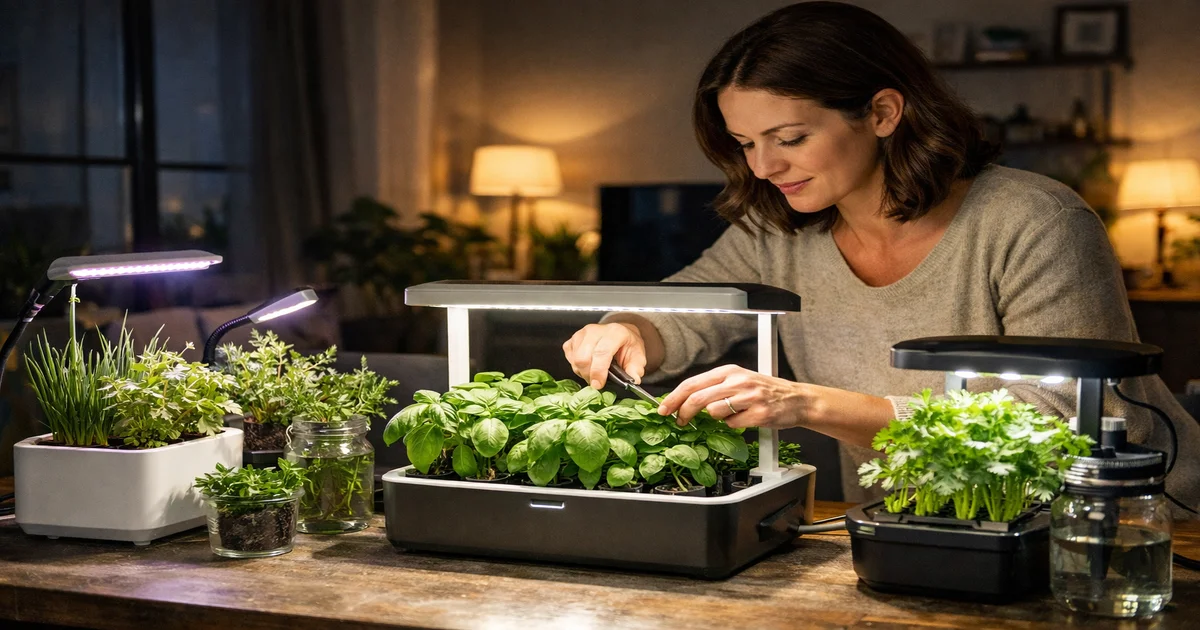
I tested three different countertop hydroponic systems: AeroGarden, Click & Grow, and a generic Amazon brand that cost half the price.
The AeroGarden Harvest produced the most consistent results. Seeds germinate faster in the hydroponic setup, and growth is noticeably quicker than soil. My basil went from seed to harvestable in just 3 weeks.
But here’s what the marketing doesn’t tell you: the included seed pods are expensive ($15-20 for 6 pods), and you’re locked into their ecosystem. I found ways around this by buying generic seed pods and filling them with my own seeds.
The generic Amazon system worked almost as well for 60% less money. The main difference was build quality and customer support, not plant growth.
Method 4: DIY Mason Jar Kratky Method (My Biggest Surprise)
This method shocked me because it seems too simple to work. You fill mason jars with hydroponic nutrients, suspend herb cuttings or seedlings in the solution, and place them under any grow light.
I started basil and mint cuttings from the grocery store. Within two weeks, I had roots, and within a month, I was harvesting. The total cost per jar setup is under $3, not counting the light.
The Kratky method works because the water level drops as plants grow, creating an air gap that roots need. No pumps, no electricity except for lighting, no complicated timing.
My mint exploded in this setup. One cutting became a plant that produces enough mint for daily tea. This method has the lowest barrier to entry of anything I tested.
Method 5: Microgreens Under Basic Shop Lights
If you want herbs fast and don’t mind replanting every few weeks, microgreens are incredible. I grow them in shallow trays under basic 4-foot LED shop lights.
Cilantro, basil, and arugula microgreens are ready to harvest in 7-14 days. They’re more nutrient-dense than mature plants, and one packet of seeds produces multiple harvests.
I use coconut coir as the growing medium because it’s clean and holds moisture well. The setup fits on wire shelving in my utility room, and I stagger plantings weekly for continuous harvests.
The limitation is obvious: you’re eating baby plants, not mature herbs. But for garnishes and salads, microgreens are unbeatable for speed and nutrition.
Method 6: Windowsill Supplement Lighting
Even if you have some natural light, it’s probably not enough during winter months. I supplement my one north-facing window with a small clip-on grow light.
This hybrid approach works great for maintaining herbs that you started outdoors or bought from the nursery. The natural light provides baseline energy, and the LED fills in during short winter days.
I run the supplemental light for 6-8 hours daily, focusing on late afternoon and evening when natural light fades. This extends my growing season and keeps summer herbs alive through winter.
The key is positioning the light to complement, not compete with, natural light angles.
Which Herbs Actually Thrive Without Sunlight?
After killing more plants than I care to admit, I learned which herbs are worth your time indoors and which aren’t.
Easy wins that grow fast:
- Basil (especially Genovese and Thai varieties)
- Cilantro/Coriander
- Parsley (both flat and curly)
- Chives
- Green onions
- Lettuce and spinach
Moderate difficulty but worth it:
- Mint (contains it or it takes over)
- Dill
- Oregano
- Sage
Skip these indoors:
- Rosemary (needs intense light and dry conditions)
- Thyme (grows too slowly)
- Lavender (Mediterranean herb that hates indoor conditions)
The pattern I noticed is that fast-growing, leafy herbs adapt best to artificial light. Woody Mediterranean herbs struggle without intense, full-spectrum light for 12+ hours daily.
Common Mistakes That Kill Indoor Herbs
I made every mistake possible, so you don’t have to. The biggest killer isn’t light—it’s overwatering.
Most people water herbs like houseplants, keeping soil constantly moist. Herbs prefer to dry out slightly between waterings. I stick my finger into the soil; if it’s dry an inch down, it’s time to water.
Poor drainage kills more herbs than anything else. Every pot needs drainage holes, and I put a layer of pebbles at the bottom of containers without holes.
Another mistake is using garden soil indoors. It’s too heavy and doesn’t drain well. I use a mix of potting soil, perlite, and coconut coir for better drainage and aeration.
Temperature swings also stress plants. Keep herbs away from heating vents, air conditioners, and drafty windows. They prefer consistent temperatures between 65-75°F.
What Equipment You Actually Need to Start
You don’t need to spend hundreds of dollars to start growing herbs indoors. Here’s my minimum viable setup that works:
Basic setup ($40-60):
- LED grow light strip or small panel (24-45 watts)
- Timer for consistent lighting schedule
- Small pots with drainage holes
- Quality potting mix
- Seeds or starter plants
Upgraded setup ($100-150):
- Full-spectrum LED panel (45+ watts)
- Reflective material for walls
- Wire shelving for multiple levels
- Humidity meter
- Small fan for air circulation
I started with the basic setup and upgraded piece by piece. The timer is crucial—herbs need consistent light cycles, and I’m not disciplined enough to manually turn lights on and off daily.
For nutrients, I use a basic liquid fertilizer diluted to quarter strength every two weeks. Herbs don’t need heavy feeding like tomatoes or peppers.
Conclusion
Growing herbs indoors without sunlight isn’t just possible—it’s practical and cost-effective once you know what works. The LED strip method gives you the best bang for your buck if you’re starting out, while hydroponic systems produce the fastest, most consistent results.
My current setup produces more fresh herbs than my family can use for about $20 monthly in electricity and supplies. That’s less than buying fresh herbs twice at the grocery store, and the quality is better.
Start simple with shade-tolerant herbs like basil and cilantro under basic LED lights. You’ll have fresh herbs in 3-4 weeks and save hundreds annually on grocery store herbs. Once you see how easy it is, you can expand to more sophisticated setups.
The key is choosing the right method for your space, budget, and commitment level. Even the simplest setup beats wilted, overpriced store herbs every time.
Frequently Asked Questions
How much electricity do LED grow lights use for herbs?
A 24-watt LED strip running 14 hours daily costs about $3-5 monthly on your electric bill.Can I use regular LED bulbs instead of grow lights?
Regular LEDs lack the full spectrum plants need. Grow lights provide specific wavelengths for photosynthesis that regular bulbs don’t.How long do indoor herbs take to grow from seed?
Fast herbs like basil and cilantro are ready to harvest in 3-4 weeks. Slower herbs like oregano take 6-8 weeks.Do I need special soil for indoor herbs?
Use quality potting mix, not garden soil. Garden soil is too heavy and doesn’t drain well in containers.How often should I water indoor herbs?
Water when the top inch of soil feels dry, usually every 3-5 days depending on humidity and pot size.
