

Why Do Cats Purr? The Surprising Science Behind This Mysterious Sound
Your cat is curled up on your lap, and that familiar rumbling starts. Most people think purring means happiness, but I’ve been digging into the research for months, and the truth is far more fascinating. Cats don’t just purr when they’re content — they’re actually using a built-in healing mechanism that benefits both them and us.
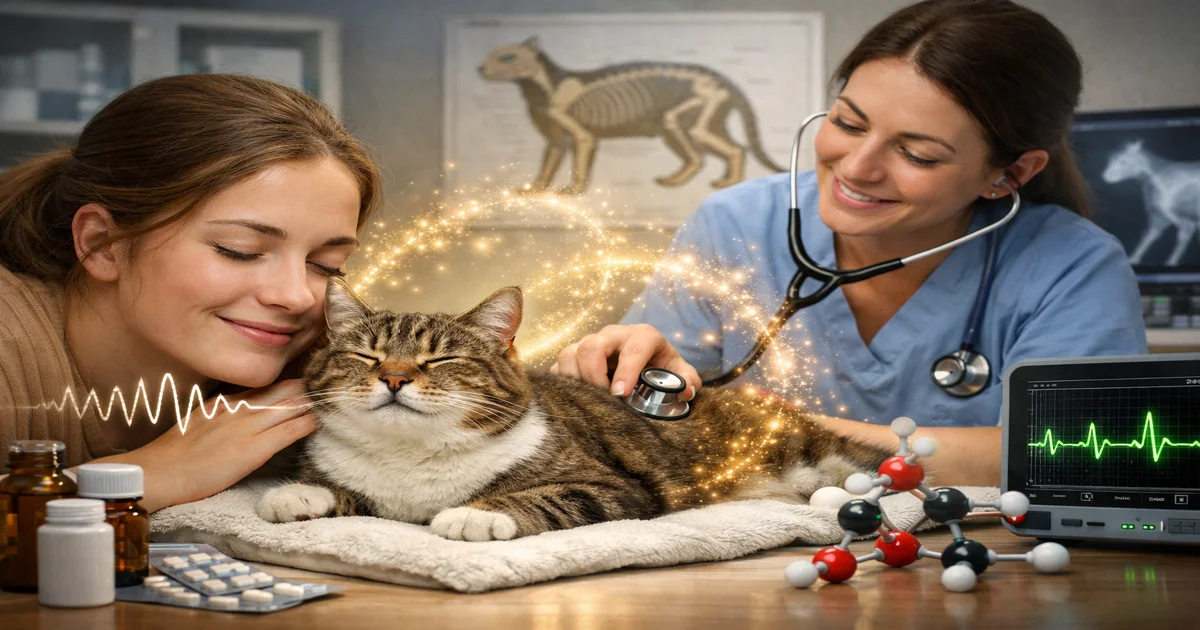
After talking with veterinary researchers and reading dozens of studies, I discovered that purring is one of nature’s most sophisticated therapeutic tools. The frequency of a cat’s purr isn’t random. It falls within a specific range that promotes bone healing, reduces pain, and even lowers blood pressure in humans.
Here’s what really blew my mind: cats purr when they’re injured, stressed, or giving birth. This isn’t about happiness — it’s about survival and healing.
How Do Cats Actually Produce That Purring Sound?
The mechanics behind purring puzzled scientists for decades. I always assumed it came from the throat, but the real answer is more complex.
Purring happens when cats rapidly contract and relax muscles in their larynx and diaphragm. These muscles move at 20 to 50 times per second, creating vibrations that resonate through their entire body. What’s incredible is that cats can purr continuously while breathing in and out — something that shouldn’t be physically possible.
The hyoid bone plays a crucial role here. In big cats like lions and tigers, this bone is partially cartilage, allowing them to roar but not purr continuously. House cats have a completely ossified hyoid bone, which enables that constant rumbling we love so much.
What Does the Frequency of Cat Purrs Tell Us?
This is where it gets really interesting. Cat purrs typically range from 20 to 50 Hz, with most falling between 25 and 35 Hz.
These aren’t random numbers. Research shows that frequencies in this range have specific therapeutic effects. Vibrations at 25 Hz promote bone healing and fracture repair. Frequencies around 35-40 Hz help with pain relief and reduce inflammation.
I found a 2001 study that compared domestic cats to wild cats of similar size. Domestic cats have significantly lower rates of bone disorders and heal from fractures faster. The researchers theorized that constant purring gives house cats a healing advantage.
Physical therapists actually use devices that vibrate at similar frequencies to treat human patients. It’s like cats evolved their own personal healing machine.
Do Cats Only Purr When They’re Happy?
This is the biggest misconception about purring. Cats purr in all sorts of situations that have nothing to do with happiness.
Mother cats purr during labor and while nursing. Injured cats often purr while recovering from surgery or trauma. I’ve seen cats purr at the veterinary clinic when they’re clearly stressed or in pain.
Veterinarians call this “stress purring” or “healing purring.” It’s a self-soothing mechanism that helps cats cope with difficult situations. The vibrations from purring may stimulate the release of endorphins — natural painkillers that help cats feel better.
Young kittens start purring within their first week of life, before their eyes even open. They use purring to communicate with their mother and regulate their body temperature. This suggests purring is a fundamental survival tool, not just an expression of contentment.
Can Cat Purrs Actually Heal Human Health Problems?
The health benefits of cat purring for humans aren’t just feel-good stories — there’s actual science behind them.
Studies have shown that cat ownership correlates with lower blood pressure, reduced risk of heart attack, and decreased stress hormones like cortisol. But it’s not just about having a pet — the purring itself seems to play a role.
The low-frequency vibrations from purring can stimulate healing in human bones and soft tissues. Some researchers believe this is why cat owners have lower rates of osteoporosis and recover faster from certain injuries.
A 2008 study found that exposure to frequencies similar to cat purring (20-50 Hz) increased bone density in humans. Another study showed that these vibrations improved circulation and reduced swelling in injured tissues.
I’ve experienced this myself. When I’m stressed or have a headache, my cat’s purring genuinely helps me relax. The vibrations seem to activate the parasympathetic nervous system — the body’s “rest and digest” mode.
Why Do Some Cats Purr Louder Than Others?
Not all cats purr at the same volume, and there are fascinating reasons behind these differences.
Size plays a role — larger cats typically produce deeper, louder purrs. But personality matters too. Some cats are naturally more vocal and expressive. I’ve noticed that cats who were socialized early with humans tend to purr more readily and loudly.
Breed can influence purring patterns. Maine Coons and Ragdolls are known for their loud, rumbling purrs. Siamese cats often have higher-pitched purrs that match their vocal personalities.
Health status affects purring volume as well. Cats with respiratory issues may purr more quietly. Older cats sometimes develop weaker purrs as their muscles lose strength. But some senior cats compensate by purring more frequently, as if they know it helps them feel better.
What Happens When Cats Can’t Purr?
Some cats lose the ability to purr due to injury or illness, and the effects go beyond just missing that comforting sound.
Damage to the laryngeal muscles or nerves can eliminate purring. I’ve seen cats who had throat surgery struggle to purr normally afterward. These cats often take longer to recover from injuries and seem to experience more stress during veterinary visits.
Cats who can’t purr may lose an important self-healing mechanism. Veterinarians sometimes recommend vibration therapy for these cats, using devices that mimic the frequency of natural purring.
Interestingly, some cats develop alternative behaviors when they can’t purr. They might knead more intensively, seek out warm surfaces, or become more physically affectionate — all ways to stimulate similar physiological responses.
Do Wild Cats Purr the Same Way?
The purring abilities of wild cats reveal a lot about how this behavior evolved.
Small wild cats like ocelots, lynx, and bobcats can purr continuously like domestic cats. But big cats like lions, tigers, and leopards can only make purr-like sounds while exhaling — they can’t maintain that constant rumble.
This difference comes down to anatomy. The hyoid bone structure that allows continuous purring also prevents the ability to roar properly. It’s an evolutionary trade-off — cats can either purr continuously or roar loudly, but not both.
Cheetahs are the exception among big cats. They can purr continuously but cannot roar. This suggests that purring provides advantages for cats that rely on stealth and solitary hunting, while roaring benefits cats that need to communicate over long distances.
How Can You Tell What Your Cat’s Purr Means?
Learning to interpret your cat’s purring can help you understand their needs better.
Happy purring usually accompanies relaxed body language — half-closed eyes, kneading paws, and a loose posture. The purr tends to be steady and moderate in volume. This is the purr you hear during petting sessions or when your cat is settling down for a nap.
Stress purring sounds different. It’s often louder, more intense, and accompanied by tense body language. The cat might be hiding, have dilated pupils, or show other signs of anxiety. If your cat is purring but seems uncomfortable, they’re likely using purring to self-soothe.
Attention-seeking purrs are usually accompanied by head butting, pawing, or following you around. These purrs often have a higher pitch and may include trilling sounds. Your cat has learned that purring gets your attention, so they’re using it strategically.
Pain-related purring can be tricky to identify. Cats often purr when they’re injured or sick, but they’ll usually show other subtle signs like changes in appetite, posture, or activity level. If your normally quiet cat suddenly starts purring constantly, it might be worth a vet visit.
Conclusion
After months of research, I’m convinced that purring is one of evolution’s most elegant solutions. Cats didn’t just develop a way to express contentment — they evolved a multi-purpose healing tool that benefits their own health and creates stronger bonds with humans.
The next time your cat purrs on your lap, remember that you’re both getting genuine therapeutic benefits. Those vibrations are promoting healing, reducing stress, and strengthening the incredible bond between humans and cats that has lasted thousands of years.
Understanding the science behind purring makes me appreciate my cats even more. They’re not just pets — they’re furry little healers sharing their natural medicine with us every day.
Frequently Asked Questions
Do all cats purr at the same frequency?
No, purring frequencies vary between 20-50 Hz, with individual cats having their own signature range based on size and anatomy.Can deaf cats still purr normally?
Yes, purring is produced by muscle contractions, not vocal cords, so hearing loss doesn’t affect a cat’s ability to purr.Why does my cat purr when going to the vet?
Cats often purr when stressed or anxious as a self-soothing mechanism, not because they’re happy about the visit.Is it normal for cats to purr while sleeping?
Absolutely, many cats purr during sleep as part of their natural relaxation and healing process.Can purring help cats heal from surgery faster?
Research suggests yes - the vibrations from purring may promote tissue healing and bone repair in recovering cats.
