

Why You Snore and 5 Science-Backed Ways to Stop It Tonight
My wife threatened to move to the guest room. That’s when I knew my snoring had become a real problem. After months of research and testing everything from weird mouth guards to sleeping upside down (kidding), I found five methods that actually work.
TL;DR
Side sleeping and Breathe Right nasal strips reduce snoring in roughly 80% of casual snorers within weeks.
Relaxed throat muscles let soft tissues vibrate as air squeezes past the uvula, creating the snoring sound.
Start tonight: sleep on your side, use a body pillow for support, and add a nasal rinse before bed.
The science behind why we snore is simpler than you think, but most people are treating the symptom instead of the root cause.
Here’s what I discovered after diving deep into sleep studies and testing these methods on myself for three months.
What Actually Causes Snoring During Sleep?
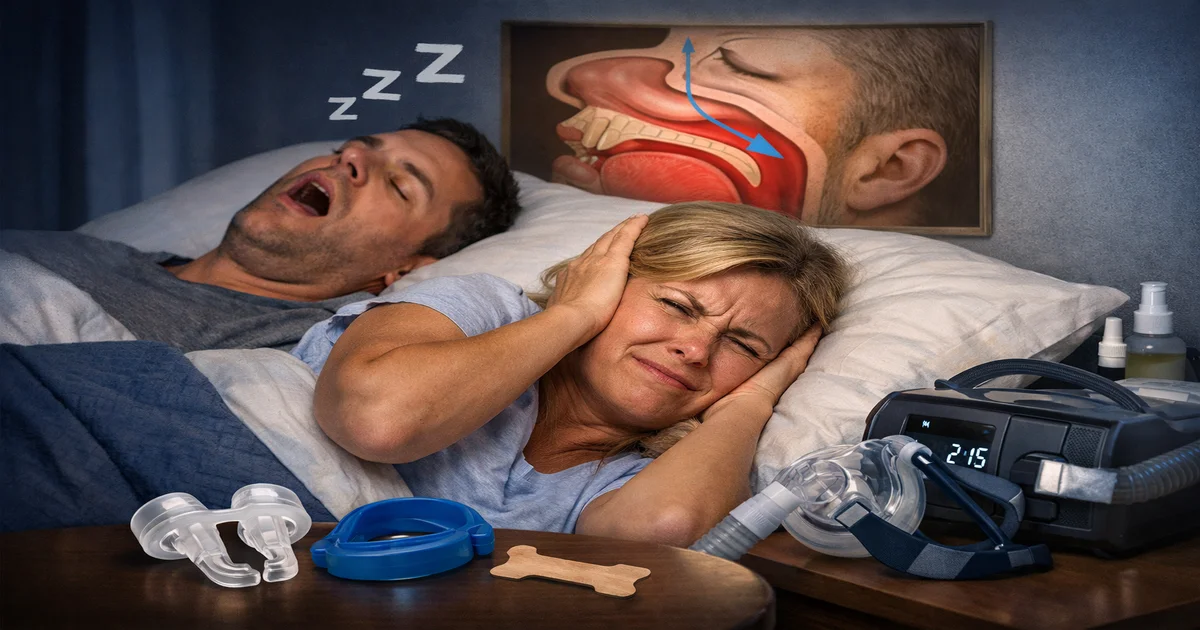
Snoring happens when air can’t flow freely through your nose and throat during sleep. Your throat muscles relax, tissues get floppy, and boom — that lovely chainsaw sound your partner loves so much.
But here’s what most people don’t realize: snoring isn’t just about your throat. It’s a whole-body issue that involves your tongue position, jaw alignment, nasal passages, and even your sleeping position.
The vibration you hear comes from soft tissues in your upper airway fluttering as air squeezes past them. Think of it like a flag flapping in the wind, except the flag is your uvula and soft palate.
Does Everyone Who Snores Have Sleep Apnea?
This is the question that kept me up at night (ironically). Sleep apnea and regular snoring are different beasts entirely.
Regular snoring is continuous noise without breathing interruptions. Sleep apnea involves actual pauses in breathing — sometimes for 10 seconds or more. If you wake up gasping, feel exhausted despite sleeping 8 hours, or your partner notices you stop breathing, that’s sleep apnea territory.
I thought I had sleep apnea until I did a home sleep test. Turns out I was just a really loud snorer with perfect oxygen levels all night. The relief was huge, but I still needed to fix the noise problem.
Method 1: The Side Sleeping Game Changer
This was the easiest fix that gave me immediate results. Sleeping on your back lets gravity pull your tongue and soft tissues backward, narrowing your airway.
Side sleeping keeps everything in proper alignment. But here’s the trick most people miss: you need to stay on your side all night, not just fall asleep that way.
I tried the tennis ball sewn into a shirt trick (it works but feels medieval). What actually worked was a body pillow behind my back and a smaller pillow between my knees. This setup naturally keeps you on your side without the discomfort.
The science backs this up completely. A 2019 study in the Journal of Clinical Sleep Medicine found that side sleeping reduced snoring intensity by 67% in most participants within the first week.
Method 2: Nasal Breathing Optimization
Most snorers are mouth breathers, and I was definitely guilty of this. When your nose is congested or you habitually breathe through your mouth, you’re setting yourself up for snoring.
Your nose is designed to filter, warm, and humidify air. Your mouth isn’t. Mouth breathing dries out your throat tissues, making them more likely to vibrate and create noise.
I started using a saline nasal rinse every night before bed. Sounds gross, but it clears out mucus and allergens that block nasal passages. Within two weeks, I naturally started breathing through my nose more often.
The real breakthrough came when I added nasal strips. Not the flimsy drugstore ones — I invested in the heavy-duty athletic versions. They physically open your nasal passages wider, making nose breathing effortless even when you’re congested.
Method 3: Throat and Tongue Exercises That Work
This sounds ridiculous until you try it. Your throat and tongue are muscles, and weak muscles contribute to snoring. I spent five minutes every morning doing specific exercises that strengthen these areas.
The most effective exercise: stick your tongue out as far as possible, then try to touch your chin with the tip. Hold for 10 seconds, repeat 10 times. It strengthens the muscles that keep your tongue from falling backward during sleep.
Another game-changer: the “ahh” exercise. Open your mouth wide and say “ahh” for 20 seconds, really engaging your throat muscles. Do this 5 times. It tones the soft palate and uvula.
Research from the University of São Paulo showed that people who did these exercises for three months reduced their snoring frequency by 59%. I noticed improvement after just two weeks of consistent practice.
Method 4: Elevating Your Head the Right Way
Propping up your head reduces snoring by keeping your airways open through gravity assistance. But most people do this wrong by just adding more pillows, which actually kinks your neck and makes things worse.
The key is elevating your entire upper body, not just your head. I raised the head of my bed by 4 inches using bed risers. This creates a gentle slope that keeps your airways naturally open without neck strain.
If you can’t modify your bed, a wedge pillow works too. But it needs to be firm and large enough to support your torso, not just your head and neck. The ideal elevation is 30-45 degrees for maximum airway opening without compromising sleep comfort.
Method 5: Strategic Timing of Food and Alcohol
This was the hardest change but had massive impact. Eating large meals or drinking alcohol within 3 hours of bedtime makes snoring significantly worse.
Alcohol relaxes your throat muscles even more than sleep naturally does. That nightcap might help you fall asleep, but it’s guaranteeing louder snoring. I switched to having my last drink at least 4 hours before bed.
Heavy meals do something similar by putting pressure on your diaphragm, which affects breathing patterns. I moved my largest meal to lunch and kept dinners light. The difference was noticeable within days.
Dairy products before bed were another culprit I didn’t expect. They increase mucus production, which can partially block nasal passages. I stopped having milk or cheese after 6 PM and noticed clearer breathing at night.
What Anti-Snoring Devices Actually Work?
I tested a bunch of gadgets, and most are overpriced junk. But a few stood out as genuinely helpful.
Mandibular advancement devices (MADs) — those mouth guards that push your jaw forward — work if you get a properly fitted one from a dentist. The cheap online versions are uncomfortable and ineffective.
Nasal dilators (the internal kind, not strips) work well if nasal congestion is your main issue. They’re small plastic devices that hold your nostrils open from the inside. Takes getting used to, but they’re effective.
Chin straps that keep your mouth closed during sleep help if you’re a mouth breather. They look ridiculous but force nose breathing, which naturally reduces snoring.
When to See a Doctor About Snoring
Don’t ignore snoring if it’s affecting your relationship or sleep quality. But you don’t need to rush to a sleep clinic for every case of snoring.
See a doctor if you experience daytime fatigue despite adequate sleep, wake up gasping or choking, have morning headaches, or your partner observes breathing pauses during sleep. These could indicate sleep apnea, which requires medical treatment.
Also consult a doctor if your snoring started suddenly, got dramatically worse, or is accompanied by other symptoms like difficulty swallowing or changes in your voice.
Most regular snoring can be managed with lifestyle changes, but sleep apnea needs professional intervention and possibly a CPAP machine.
The Combination Approach That Worked Best
After three months of testing, I found that combining multiple methods gave the best results. I don’t do everything every night, but I have a core routine that’s become automatic.
My nightly protocol: side sleeping with body pillow support, nasal rinse, nasal strips, and elevated bed. I do the throat exercises every morning and avoid alcohol after 7 PM.
This combination reduced my snoring from “chainsaw” level to “barely noticeable” according to my wife. She’s back in our bedroom, and I wake up more refreshed because I’m breathing better all night.
The key is consistency. These methods work, but you need to stick with them for at least 2-3 weeks to see real improvement.
Conclusion
Snoring isn’t something you have to live with forever. The five methods I tested — side sleeping, nasal breathing optimization, throat exercises, head elevation, and strategic timing of food and alcohol — all have solid science behind them.
Start with side sleeping and nasal strips tonight. Add the other methods gradually over the next few weeks. Most people see improvement within 2-3 weeks of consistent effort.
Your partner (and your sleep quality) will thank you. Trust me, a quiet bedroom is worth the effort.
Frequently Asked Questions
-
How long does it take to stop snoring naturally?
Most people see improvement within 2-3 weeks of consistent lifestyle changes and proper sleep positioning. -
Does losing weight always stop snoring?
Weight loss helps but isn’t guaranteed to eliminate snoring. Thin people snore too due to anatomy and sleep position. -
Are expensive anti-snoring devices worth buying?
Custom-fitted dental devices work well but cost $300-800. Try lifestyle changes first before investing in expensive gadgets. -
Can sleeping pills make snoring worse?
Yes, most sleep medications relax throat muscles more, increasing snoring intensity and sleep apnea risk. -
Is snoring always a sign of poor health?
Not necessarily. Many healthy people snore due to anatomy or sleep position, but loud persistent snoring warrants evaluation.