

Why Your Brain Craves Junk Food: The Psychology Behind Food Addiction
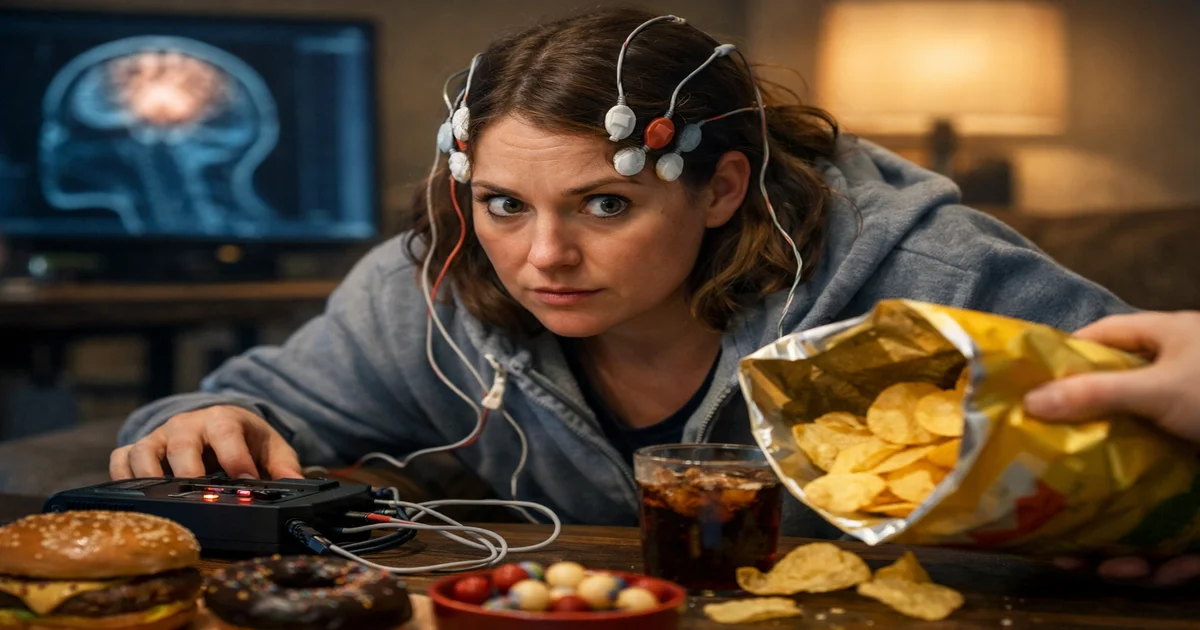
Your brain on junk food looks remarkably similar to your brain on cocaine. I’m not being dramatic — neuroscientist Dr. Nicole Avena’s 2008 Princeton study literally showed the same dopamine pathways lighting up. After diving into two years of food addiction research, I’ve discovered that your willpower isn’t weak, your brain is being chemically hijacked by billion-dollar food companies who know exactly which buttons to push.
The food industry spends $1.8 billion annually on neuroscience research. Not to make food healthier, but to make it more addictive. They’ve cracked the code on what scientists call the “bliss point” — the perfect combination of sugar, salt, and fat that triggers maximum dopamine release in your brain.
Here’s what most people don’t realize: processed foods are engineered to bypass your natural satiety signals. Your great-grandmother never had to resist Doritos because Doritos didn’t exist. She ate when hungry, stopped when full. Today, we’re fighting a battle our brains weren’t designed to win.
What Happens in Your Brain When You Eat Junk Food?
The moment that first bite of pizza hits your tongue, your brain releases a flood of dopamine — the same neurotransmitter involved in gambling, drugs, and sex addiction. But here’s the kicker: junk food triggers a bigger dopamine spike than natural foods ever could.
When you eat an apple, your dopamine rises modestly and returns to baseline. When you eat a Snickers bar, dopamine skyrockets 200-300% above normal levels. Your brain remembers this massive reward and starts craving it again within hours.
This isn’t willpower failure. This is basic neuroscience. Food companies hire neuroscientists specifically to create what they call “heavy users” — people who can’t stop eating their products. Internal documents from major food corporations literally use addiction terminology when discussing their most profitable customers.
The scariest part? Your brain adapts to these dopamine floods by reducing the number of dopamine receptors. This means you need more junk food to feel the same satisfaction. It’s the exact same tolerance mechanism that drives drug addiction.
Why Sugar Hits Your Brain Like a Drug
Sugar activates the same reward pathways as morphine and cocaine. Dr. Bart Hoebel’s research at Princeton showed that rats given intermittent access to sugar developed all the hallmarks of addiction: bingeing, withdrawal, craving, and cross-sensitization to other drugs.
But refined sugar in processed foods is different from natural sugars in fruit. When you eat an orange, the fiber slows sugar absorption, preventing the massive blood sugar spike that triggers dopamine flooding. A can of Coke delivers 39 grams of sugar directly to your bloodstream with no fiber buffer.
Your brain interprets this sugar rush as a survival signal. For millions of years, sweet foods were rare and indicated high-calorie nutrition needed for survival. Your brain still thinks finding a Twinkie is like discovering a honeycomb in the wild — except now these “rare” treats are available 24/7 at every gas station.
The withdrawal is real too. Studies show that people cutting sugar experience anxiety, irritability, and depression similar to drug withdrawal. Brain scans reveal decreased activity in the prefrontal cortex — the area responsible for decision-making and impulse control.
The Salt-Fat-Sugar Trinity That Hijacks Your Brain
Food scientists don’t just add sugar randomly. They’ve discovered that combining sugar, salt, and fat in specific ratios creates what researchers call “hedonic hyperphagia” — eating for pleasure rather than hunger.
This trinity works because it triggers multiple reward pathways simultaneously. Salt enhances flavor perception, making everything taste more intense. Fat carries flavors and creates the creamy mouthfeel your brain associates with high-calorie nutrition. Sugar provides the immediate dopamine hit that makes you want more.
Lay’s didn’t accidentally stumble onto their “bet you can’t eat just one” slogan. Their food scientists spent years perfecting the exact salt-to-fat ratio that makes it nearly impossible to stop eating. Internal company documents reveal they test thousands of formulations to find the precise “bliss point” for maximum consumption.
The most addictive foods hit multiple sensory triggers: the crunch of chips (satisfying and novel), the melt-in-your-mouth texture of chocolate (triggers fat receptors), and the sweet-salty combination that keeps you reaching for more.
How Food Companies Exploit Your Psychology
Here’s something that’ll make you angry: food companies employ teams of psychologists, neuroscientists, and behavioral economists whose only job is making their products more addictive. They study your eating habits more intensively than you do.
They’ve discovered that variety increases consumption. That’s why there are 47 different Oreo flavors — not because you need birthday cake Oreos, but because novelty triggers dopamine and prevents habituation. Your brain gets excited about “new” even when it’s just the same sugar-fat combination with different marketing.
The packaging psychology is equally manipulative. Bright colors trigger excitement. Curved fonts suggest sweetness. Even the sound of opening a bag of chips is engineered — that satisfying “pop” of opening a Pringles can isn’t accidental. It’s a conditioned trigger that starts salivation before you even see the food.
Food companies spend more on addiction research than most universities spend on nutrition education. They know exactly how to make you crave their products, but they’re not required to share this research publicly.
The Emotional Eating Connection
Your brain doesn’t just crave junk food for pleasure — it uses it as emotional medication. When you’re stressed, your brain releases cortisol, which triggers cravings for high-calorie foods. This made sense when stress meant famine or physical danger. Now stress means work deadlines and traffic jams, but your brain still demands the same high-calorie response.
Comfort foods literally comfort you by triggering endorphin release. That pint of ice cream after a breakup isn’t just emotional eating — it’s self-medication. Your brain has learned that certain foods provide temporary relief from negative emotions.
The problem is that emotional eating creates a vicious cycle. You eat junk food to feel better, experience guilt and shame, then eat more junk food to cope with those negative feelings. Meanwhile, the blood sugar crashes from processed foods actually increase anxiety and depression, making you more likely to reach for comfort foods again.
Food marketers exploit this emotional connection ruthlessly. Notice how junk food ads never focus on hunger — they sell happiness, comfort, social connection, and stress relief. McDonald’s doesn’t sell burgers; they sell “I’m lovin’ it.”
Why Willpower Isn’t Enough to Beat Food Addiction
If you’ve ever failed a diet, it wasn’t because you lack discipline. It’s because willpower operates in the prefrontal cortex — the newest part of your brain in evolutionary terms. Food cravings operate in the limbic system — the ancient, powerful part that kept your ancestors alive.
When these two brain regions conflict, the limbic system usually wins. It’s like trying to stop a freight train with a bicycle. Your rational brain knows the donut is unhealthy, but your limbic brain screams “SURVIVAL FOOD!” and floods you with craving chemicals.
Sleep deprivation makes this worse. When you’re tired, your prefrontal cortex goes offline first, leaving your impulse-driven limbic system in charge. This is why you crave junk food more when you’re exhausted — your brain’s CEO has left the building, and the toddler is running the company.
Stress has the same effect. Chronic stress shrinks the prefrontal cortex while enlarging the amygdala (fear center). This literally rewires your brain to be more impulsive and less rational around food choices.
The Microbiome Connection Most People Miss
Here’s where it gets really wild: the bacteria in your gut actually influence your food cravings. Different bacterial species thrive on different nutrients, and they can send signals to your brain demanding their preferred foods.
If you eat a lot of sugar, you cultivate sugar-loving bacteria that literally make you crave more sugar. These bacteria produce chemicals that affect your mood and decision-making. When you try to cut sugar, these bacteria “revolt” by making you feel anxious and irritable until you feed them what they want.
This explains why the first few days of changing your diet are the hardest. You’re not just fighting your own cravings — you’re fighting billions of microorganisms that depend on junk food for survival. After about a week of healthier eating, the bacterial population shifts, and cravings naturally decrease.
Your gut bacteria can hijack your brain’s reward system to demand the foods they need to survive. It’s like having tiny drug dealers living in your intestines.
Breaking Free From the Junk Food Trap
Understanding the neuroscience behind food addiction is the first step to freedom. Once you realize your cravings aren’t a personal failing but a biological response to engineered foods, you can start working with your brain instead of against it.
The most effective approach isn’t restriction — it’s replacement. Instead of trying to eliminate dopamine-triggering foods completely, you need to retrain your reward system to find pleasure in healthier options. This takes time because you’re literally rewiring neural pathways that have been reinforced for years.
Start by adding rather than subtracting. Add protein to every meal to stabilize blood sugar. Add fiber-rich vegetables that feed beneficial gut bacteria. Add healthy fats that provide sustained energy without the crash. Your brain will gradually start associating these foods with feeling good.
Timing matters too. Eat regular meals to prevent the blood sugar drops that trigger junk food cravings. When you’re genuinely hungry, your brain is more likely to accept healthy foods. When you’re starving, it demands quick energy from processed foods.
The 21-Day Brain Rewiring Protocol
Based on neuroscience research, it takes about 21 days of consistent behavior change to start rewiring your brain’s reward pathways. Here’s what actually works, backed by studies:
Days 1-7 are the hardest because you’re fighting both psychological habits and bacterial die-off. Expect irritability, fatigue, and intense cravings. This is normal withdrawal, not willpower failure.
Days 8-14 show the first improvements. Your taste buds start recovering from the constant overstimulation of processed foods. Natural foods begin tasting sweeter and more satisfying.
Days 15-21 mark the turning point. Your gut bacteria have shifted toward beneficial species. Your dopamine receptors begin recovering their sensitivity. Healthy foods start triggering genuine satisfaction.
The key is consistency, not perfection. One slip doesn’t reset the process, but frequent slips prevent the neural rewiring from taking hold.
Conclusion
Your brain isn’t broken if you crave junk food — it’s responding exactly as evolution programmed it to high-calorie, highly palatable foods that were once rare and necessary for survival. The problem is that food companies have weaponized this ancient survival mechanism against you.
Breaking food addiction isn’t about willpower; it’s about understanding and working with your brain’s reward system. Once you recognize that your cravings are chemically driven responses to engineered foods, you can start making strategic changes that retrain your neural pathways.
The most important thing to remember is that this process takes time. You’re not just changing habits — you’re rewiring your brain and rebalancing your gut bacteria. Be patient with yourself, focus on addition rather than restriction, and trust that your taste buds and cravings will naturally shift as your biology adapts to real food.
Frequently Asked Questions
How long does it take to overcome junk food addiction?
Most people see significant improvement in cravings after 2-3 weeks, with full neural rewiring taking 6-8 weeks of consistent changes.Why do I crave junk food more when I’m stressed?
Stress releases cortisol, which triggers cravings for high-calorie foods as an ancient survival response to perceived threats.Can you really be addicted to food like drugs?
Yes, brain scans show processed foods activate the same dopamine pathways as cocaine, creating similar addiction patterns.Why is it harder to stop eating junk food than healthy food?
Junk food is engineered to hit the “bliss point” of sugar, salt, and fat that maximizes dopamine release and overrides satiety signals.Do artificial sweeteners help break sugar addiction?
No, artificial sweeteners maintain your sweet taste preferences and can actually increase cravings for sugary foods by confusing your brain’s reward system.
