

Tarot Reading: Unlocking Mysteries and Insights
Tarot reading has fascinated people for centuries, offering guidance, reflection, and a structured way to explore questions that are often difficult to organize in plain conversation.
TL;DR
A standard tarot deck has 78 cards split into Major Arcana and Minor Arcana with distinct meanings.
Tarot originated as playing cards in 15th-century Europe before evolving into a divination tool.
Readings use specific card spreads to explore life questions and connect with personal intuition.
With its blend of history, symbolism, and intuitive exploration, tarot can function both as a symbolic practice and as a practical tool for reflection.
What Is Tarot Reading?
Tarot reading uses a deck of cards to explore questions, gain insights, and connect with your inner interpretation of a situation.
A standard tarot deck has 78 cards divided into two main groups:
» The Major Arcana, which represent big life themes.
» The Minor Arcana, which focus on daily events and challenges.
Each card carries imagery and meanings that can help organize thought, emotion, and perspective. For some people tarot has a spiritual dimension; for others it works more like a reflective framework. Both approaches can coexist.
A Glimpse Into Tarot’s History
Tarot cards began as playing cards in 15th-century Europe. By the 18th century, they evolved into a tool for divination and self-reflection.
Over time, tarot blended with esoteric traditions, astrology, and spirituality, becoming a beloved practice for personal growth and insight. That historical layering is part of why tarot attracts people with very different beliefs and expectations.
Why Do People Use Tarot?
People turn to tarot for various reasons:
- Clarity:
To find direction in confusing situations. - Healing:
To process emotions and past experiences. - Growth:
To align with their spiritual path and life goals. - Connection:
To build trust in their intuition. - Inspiration:
To spark creativity and fresh ideas.
Some readers also use tarot to slow down decision-making. When life feels noisy, the ritual of shuffling, drawing, and interpreting symbols can create enough distance to notice what the mind was already avoiding.
Getting Started With Tarot
Your first tarot deck should feel personal. The Rider-Waite Tarot is great for beginners, while decks like The Wild Unknown or Thoth Tarot appeal to more advanced readers.
Pick a design that inspires you. That sense of connection matters because it makes practice easier to sustain, especially at the beginning.
Learn the Basics of the Cards
Each card in the tarot deck has a story. Spend time understanding their meanings and how they apply to your questions. Guidebooks, online tutorials, and tarot courses are excellent resources.
With practice, the cards’ messages will feel more intuitive. The goal is not to memorize every possible interpretation at once, but to understand recurring patterns, suits, symbols, and how context changes meaning.
Create the Right Environment
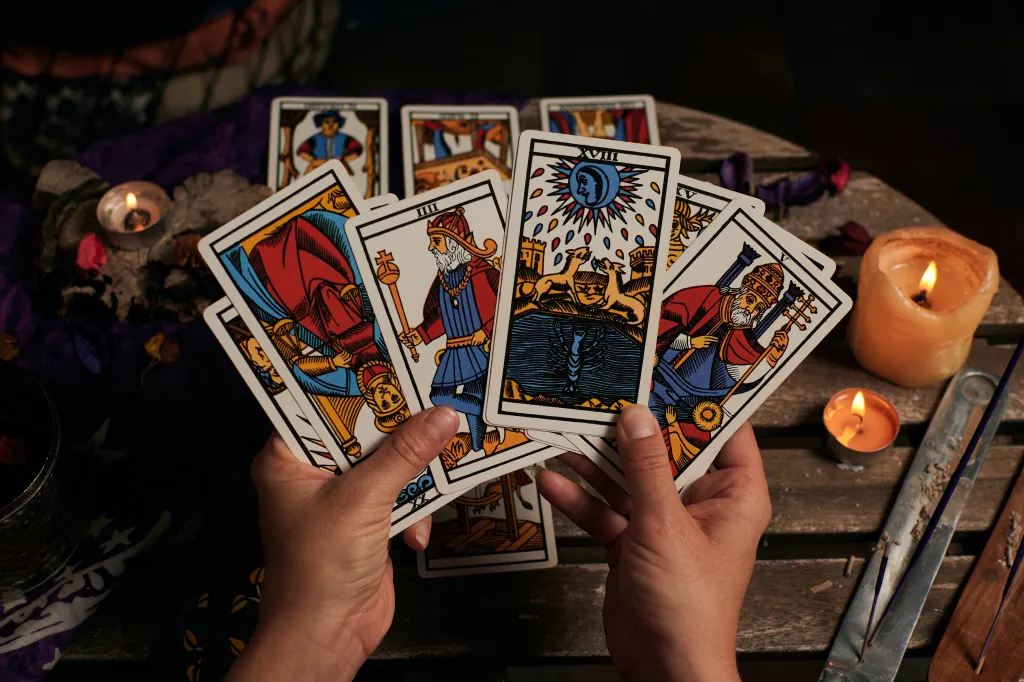
Set up a calm, distraction-free space for your readings. Add candles, incense, or crystals to create a sacred atmosphere. This helps you focus and tune into your energy.
Start With Simple Spreads
Begin with easy layouts, such as the one-card or three-card spread, to avoid feeling overwhelmed. As you grow more confident, explore more complex arrangements like the Celtic Cross or Relationship Spread.
Popular Tarot Spreads
» Here are some spreads to try:
- One-Card Spread:
Offers quick guidance for the day or a specific question. - Three-Card Spread:
Explores past, present, and future influences. - Celtic Cross Spread:
A detailed 10-card layout for deep insight into a situation. - Yes/No Spread:
Uses one or two cards to answer straightforward questions.
What Beginners Often Get Wrong
Many beginners rush into tarot expecting instant certainty or dramatic predictions. That usually creates frustration. Tarot tends to become more useful when it is treated as a practice of observation rather than a machine for definitive answers.
Another common mistake is relying only on generic card meanings pulled from quick lists online. Meanings matter, but so do tone, position in the spread, the question asked, and the emotional state of the reader. Context is where the reading starts to become coherent.
Tips for Tarot Success
- Trust Your Intuition:
Let your instincts guide your interpretations. - Ask Open-Ended Questions:
Avoid yes/no inquiries for deeper insights. - Keep a Tarot Journal:
Record readings and reflections to spot patterns over time. - Cleanse Your Deck:
Use sage, crystals, or moonlight to refresh the deck’s energy. - Practice Often:
Regular use improves your connection to the cards.
Building a More Grounded Tarot Practice
A grounded tarot practice usually combines symbolism, routine, and honest self-observation. Some readers journal every spread. Others revisit the same cards after a few days to see whether their first interpretation still makes sense. That habit reduces impulsive readings and helps separate projection from insight.
It also helps to know what tarot is not. It is not a substitute for medical, financial, legal, or mental-health care. When used responsibly, tarot can support reflection and decision-making, but it should not replace qualified professional guidance in high-stakes situations.
Addressing Common Myths
- Tarot Predicts the Future:
Tarot offers guidance, not fixed outcomes. - You Need to Be Psychic:
Anyone can learn tarot; it’s about intuition and practice. - Negative Cards Are Bad Luck:
Cards like Death or The Tower often signify transformation and growth.
Benefits of Tarot Reading
» Tarot enriches your life in many ways:
- Self-Awareness:
Deepen your understanding of yourself. - Stress Relief:
Use tarot as a calming ritual. - Empowerment:
Gain confidence in navigating life’s challenges. - Creative Ideas:
Let card imagery spark new perspectives.
Frequently Asked Questions
- Do I need to believe in spirituality to use tarot?
No. Some people use tarot spiritually, while others use it as a symbolic and reflective tool for organizing thoughts and questions. - What is the best tarot spread for beginners?
The one-card and three-card spreads are usually the easiest starting points because they are simple and easier to interpret coherently. - Can tarot predict the future exactly?
Most grounded readers treat tarot as guidance and reflection rather than a fixed prediction system with guaranteed outcomes. - How do I improve my readings over time?
Practice regularly, keep a journal, study card meanings in context, and compare your interpretations with what actually happens afterward.
Final Thoughts
Tarot reading is a blend of intuition, symbolism, and self-reflection. Whether you seek answers, personal growth, or creative inspiration, tarot is a powerful companion on your journey.
Pick up a deck, set your intention, and let the cards guide you toward clarity and empowerment.